Top Pen, Pencil, and Erasable Pen Types Ranked by End-User Demand for 2026
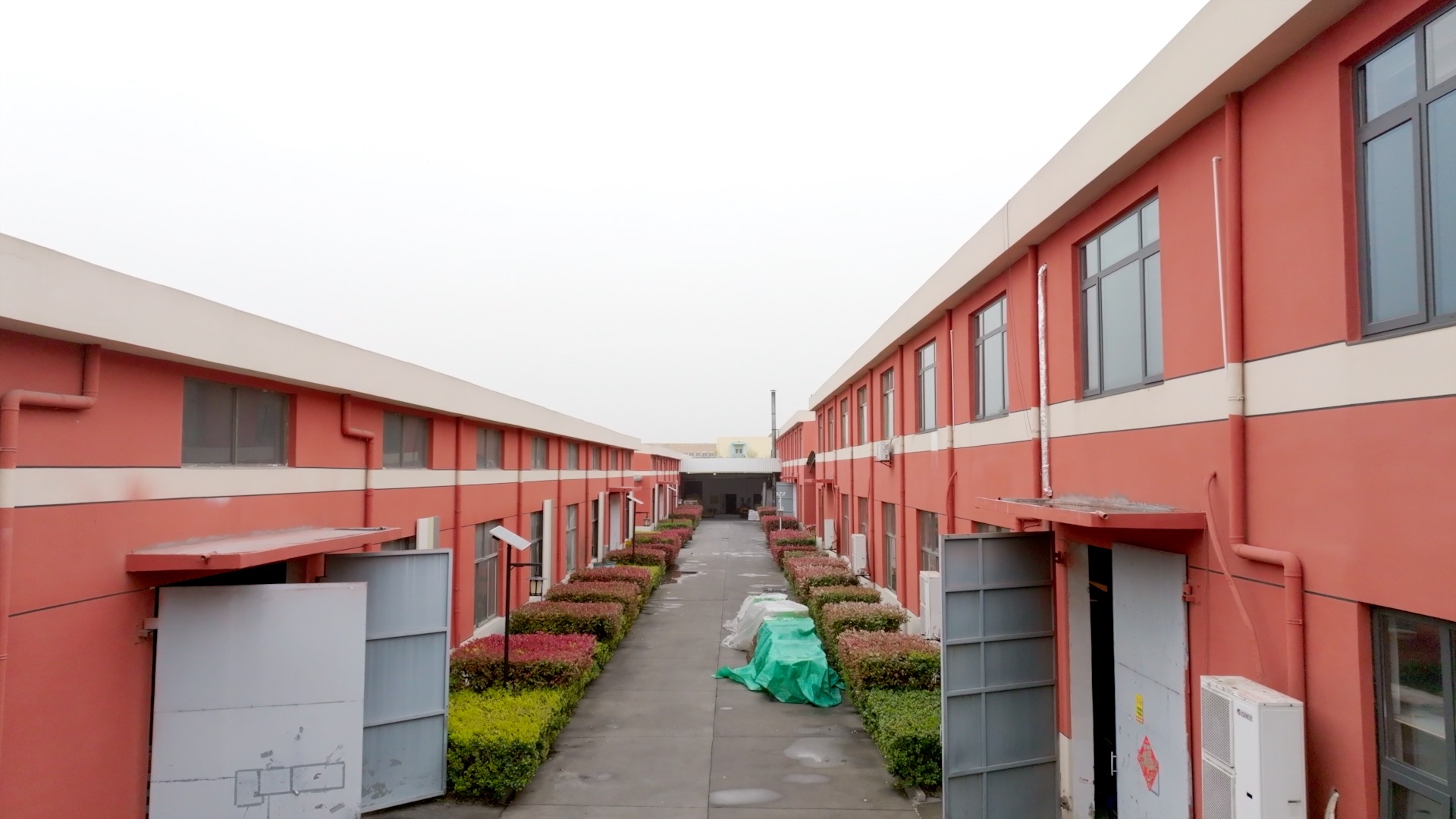
Greenwill stationery's production site in Kunshan, Jiangsu Province — the manufacturing base behind pen, pencil, and erasable pen programs.
The 2026 office-supply buying cycle is not about adding more writing instruments to a catalog. It is about defending the ones already there. Distributors, brand owners, and institutional procurement teams are consolidating assortments, cutting slow-moving SKUs, and reallocating shelf space toward categories that reorder predictably. In that environment, the decision-stage question is no longer "what is a pen?" but "which category deserves the space, and for whom?"
This article ranks the three core writing-instrument categories — pen, pencil, and erasable pen — in an ordinal order driven by end-user demand signals for 2026, and attaches a clear "best for" label to each one. The labels are aimed at specific buyer personas inside the office-supply sector, from a procurement manager standardizing a corporate catalog to an importer building a mixed school-and-office assortment.
Where third-party market data exists for a category, the ranking cites it. Where a comparable third-party figure is not part of the available dataset — as is the case for pencils — the position reflects scenario breadth, repeat-use behavior, and maintenance burden rather than an invented number.
Problem Definition: Why Choosing Between Pen, Pencil, and Erasable Pen Is Harder in 2026
The three categories photograph almost identically in a catalog listing, but they diverge on four procurement axes that determine whether a SKU survives assortment consolidation: permanence, error tolerance, maintenance burden, and compliance scope.
- Permanence. Contracts, receipts, logbooks, and shipping documents require markings that cannot be removed. Planning documents, drafts, and study notes usually require the opposite.
- Error tolerance. Revision-heavy workflows reward an instrument that can erase cleanly. Record-keeping workflows penalize it.
- Maintenance burden. Sharpening, refill replacement, and core replacement each shift after-sale effort onto the end user or the distributor.
- Compliance scope. ISO 12757-1 specifies requirements and test methods for ballpoint pens and refills for general use, while art materials exported to the United States must comply with ASTM D4236 for health hazard labeling. A three-category program therefore does not carry a single compliance checklist.
A second pressure is persona spread. The same buyer may be supplying a law firm that needs permanent ink, a design studio that needs erasable graphite, and a school district that needs a sharpening-free option for young students. Buying all three from separate suppliers multiplies audit work, sampling cycles, and freight coordination — which is exactly why the "which category first" question has become a sourcing decision rather than a stationery preference.
Industry Background: What Verified 2026 Demand Data Shows
Category-level demand is not evenly distributed, and the published market figures make that visible. The global writing instruments market was valued at USD 19.2 billion in 2025 and is projected to reach USD 27.8 billion by 2033, according to Grand View Research. Broader office supplies demand — the shelf context in which pens and pencils actually compete — was valued at approximately USD 176.5 billion in 2024 by Spherical Insights.
- Pens dominated the writing instruments market in 2025, accounting for a 36.3% revenue share (Grand View Research).
- The global gel pen market was valued at USD 4.8 billion in 2025 and is projected to reach USD 8.1 billion by 2034 (Dataintelo).
- Asia Pacific held a 42.3% revenue share of the gel pen market in 2025, led by China and India (Dataintelo).
- The global erasable gel pen market was valued at USD 1.38 billion in 2024 and is expected to reach USD 2.56 billion by 2033 (Market Intelo).
- Key global competitors in the pen and stationery market include BIC Group, Pilot Corporation, Newell Brands, and M&G Stationery (Fortune Business Insights).
One interpretive caution matters for buyers building a category case. Published estimates diverge by scope: Grand View Research puts the 2025 writing instruments market at USD 19.2 billion, while Fortune Business Insights publishes a broader figure of USD 47.64 billion for a differently defined writing instrument market. Neither number should be treated as a single reconciled total. For category-level planning, the direction of the data — pens as the volume anchor, gel and erasable formats as the growing sub-segments — is more useful than the absolute headcount.
Category-level writing-instrument data for pencils is not represented in the third-party dataset used here. That absence is stated openly rather than filled with an estimate, and it directly shapes how pencil is positioned in the ranking below.
How This Ranking Was Built
The order is ordinal — first, second, third — and uses three criteria, in this sequence:
- Verified category weight. Where third-party data attributes a market size or revenue share to a category, that figure anchors the position.
- Breadth of repeat-use scenarios. How many distinct buyer personas reorder the category on a predictable cycle.
- Replenishment and maintenance behavior. Whether the category creates recurring demand through refills, cores, or disposability, and how much maintenance it imposes on the end user.
Each ranked entry closes with a "best for" label so that buyers can match a category to a persona rather than to a vague preference.
The 2026 Ranking: Pen, Pencil, and Erasable Pen by End-User Demand
Rank #1 — Pen (Ballpoint and Gel): Best for Permanent Records and High-Volume Documentation
Pen ranks first because it is the only category among the three with an explicitly verified dominant revenue share: pens accounted for 36.3% of writing instruments revenue in 2025 (Grand View Research). No other category in this ranking carries a comparable attributed share in the available dataset.
The category is not monolithic. The ballpoint pen — frequently searched as a ball pen — relies on a ball-tip assembly and a refill, and it is the format most often specified where a permanent record is required. The gel pen uses gel-based ink for a smoother laydown and has its own verified growth curve: USD 4.8 billion in 2025, projected to USD 8.1 billion by 2034 (Dataintelo), with Asia Pacific accounting for 42.3% of that revenue in 2025. Compact formats such as the mini pen serve kit and pocket configurations, while custom pen programs supply branded and promotional demand.
From an ergonomic standpoint, the pen's advantage is that it imposes no maintenance step on the user. There is no sharpening and no core replacement; the writing experience continues until the refill is exhausted, at which point a refill — not the whole instrument — is typically the replacement unit. Greenwill's writing-pen line is built around this logic, using ultra-precision ball tips and custom eco-friendly ink to target extended writing length and uninterrupted smoothness.
Best for: banking and financial documentation, logistics and warehouse records, legal and government paperwork, examination administration, high-volume corporate office supply, and promotional or logo-bearing programs.
Limits to plan for: ink is permanent by design, so the category is unsuitable for revision-heavy workflows. Gel formulations can behave differently on coated or non-absorbent paper stock, which makes paper compatibility a sampling variable rather than an assumption. Where the category is sold into the United States as art material, ASTM D4236 health hazard labeling applies, and ballpoint pens and refills for general use fall under ISO 12757-1.
Rank #2 — Erasable Pen: Best for Error-Tolerant Planning and Revision-Heavy Work
Erasable pen takes second position. Its verified market — USD 1.38 billion in 2024, projected to reach USD 2.56 billion by 2033 (Market Intelo) — is smaller than the pen category as a whole, but it solves a problem that neither a ballpoint nor a graphite-based product solves as cleanly: erasure on an ink-based line.
The mechanism depends on a thermo-sensitive ink formulation that responds to friction heat, which is why the category is also searched as an erase pen, a friction pen, or an erasable ink pen. That same mechanism is also where the category's known procurement risk sits.
Two failure modes dominate buyer complaints in this category: unstable erasable performance, expressed as incomplete erasing or ghosting, and non-compliance with safety standards where ink toxicity is concerned. Both are production-controlled rather than design-inherent. The control path is a better ink formulation and a tighter inspection regime:
- An optimized thermo-sensitive ink formula for stable erase performance.
- A non-toxic ink formulation compliant with international standards.
- Multi-stage quality inspection covering writing tests, erasing tests, and durability tests.
- Compliance with EN71, REACH, and other international safety regulations, with continuous product optimization based on market feedback.
Best for: students and coursework, planners and project schedulers, markup and document-review cycles, engineering and design annotation, and any environment where a note must survive being changed.
Limits to plan for: erasable ink belongs to working documents, not to permanent records. Because the erase mechanism depends on heat sensitivity, it is not the right specification for documents that must withstand sustained heat exposure. Buyers should also treat "tests cleanly on our paper stock" as a sample-stage confirmation, not a catalog assumption.
Rank #3 — Pencil and Non-Sharpen Pencil: Best for Rapid Drafting and Low-Maintenance Marking
Pencil completes the ranking. No comparable third-party category market figure for pencils is included in the dataset used here, so this position rests on criterion two and three — scenario breadth and maintenance behavior — rather than on a market-size number. That limitation is stated because it affects how the position should be used in a category case.
The category splits into two functional groups. Conventional pencils require sharpening, which creates a recurring maintenance action and — in classrooms or field environments — a recurring accessory demand. Non-sharpen pencils remove that action entirely. In retail listings, the non-sharpen format appears under a wide range of names — inkless pencil, everlasting pencil, endless pencil, or eternal pencil — but the functional promise is consistent: a writing tip that does not require sharpening, paired with a body that can be refilled.
Greenwill's non-sharpen pencil is built on an eco-friendly pen barrel and a replaceable core design that supports the circular economy — a specification choice with direct procurement consequences, because it converts a disposable purchase into a core-replacement purchase. For the sharpenable side of the category, Greenwill also manufactures multi-functional pencil sharpeners, with annual output above 3 million pieces, including integrated designs that combine an eraser, pen cap, lighting, or other creative features.
Best for: rapid drafting and sketching, pencil drawing and illustration, exam preparation and test-taking, primary and secondary classrooms where sharpening disrupts instruction, and warehouse or industrial marking.
Limits to plan for: pencil markings are removable by nature, so the category cannot substitute for permanent records. Tip wear is a real specification variable in the non-sharpen format, which makes core replacement design a procurement decision rather than an afterthought. And because no attributed market-size figure is available for the category here, buyers should request category-level performance evidence from the supplier rather than rely on an industry total.

Factory overview: pen, eraser, and pencil sharpener production sit inside the same 25,000 m² operation.
The Detailed Solution: Manufacturing All Three Categories in One Program
Kunshan Crystal Culture Co., Ltd, operating as Greenwill stationery, is a writing-instrument and eraser manufacturer founded in 1999 and based in Kunshan, Jiangsu Province, China. The company is not a single-category supplier, and that is precisely what makes it relevant to a three-category ranking: it produces across all three ranked groups, so a buyer can consolidate the program rather than split it.
- Capacity: a 25,000 m² factory with approximately 100 employees, a 10-person R&D team, and annual output of more than 20 million pens, more than 260 tons of erasers, and more than 3 million pencil sharpeners.
- Three core product lines: eco-friendly erasers made with premium TPR/TPE/Eco PVC rubber and engineered for dust-free, low-residue performance; multi-functional pencil sharpeners; and writing pens and non-sharpen pencils with an eco-friendly barrel and a replaceable core design.
- Writing performance engineering: ultra-precision ball tips and custom eco-friendly ink, specified for extended writing length and uninterrupted smoothness.
- Compliance coverage: full-process quality control against EN71-1/2/3/9, REACH, PAHS, SVHC, and ASTM-D-4236, with FSC, BEPI, and ISO certifications.
- Design service: a full-process chain from market trend analysis and conceptual design through 3D modeling, UX optimization, and packaging design.
- Cooperation models: OEM/ODM, joint development, mold customization, small-batch trial production, and large-scale delivery.
- Track record: 25+ years of OEM/ODM stationery experience, a 90% export ratio, and partnerships with 100 internationally recognized brands including Papermate, STAEDTLER, and Tesco.
- Markets served: North America, South America, Europe, Southeast Asia, Oceania, and the Middle East.
The relevance to this ranking is straightforward. Rank #1 demand sits in the writing-pen line, Rank #2 demand sits in the erasable writing pen, and Rank #3 demand sits in the non-sharpen pencil and the multi-functional pencil sharpener. A buyer can validate all three against one quality system and one compliance file instead of three.
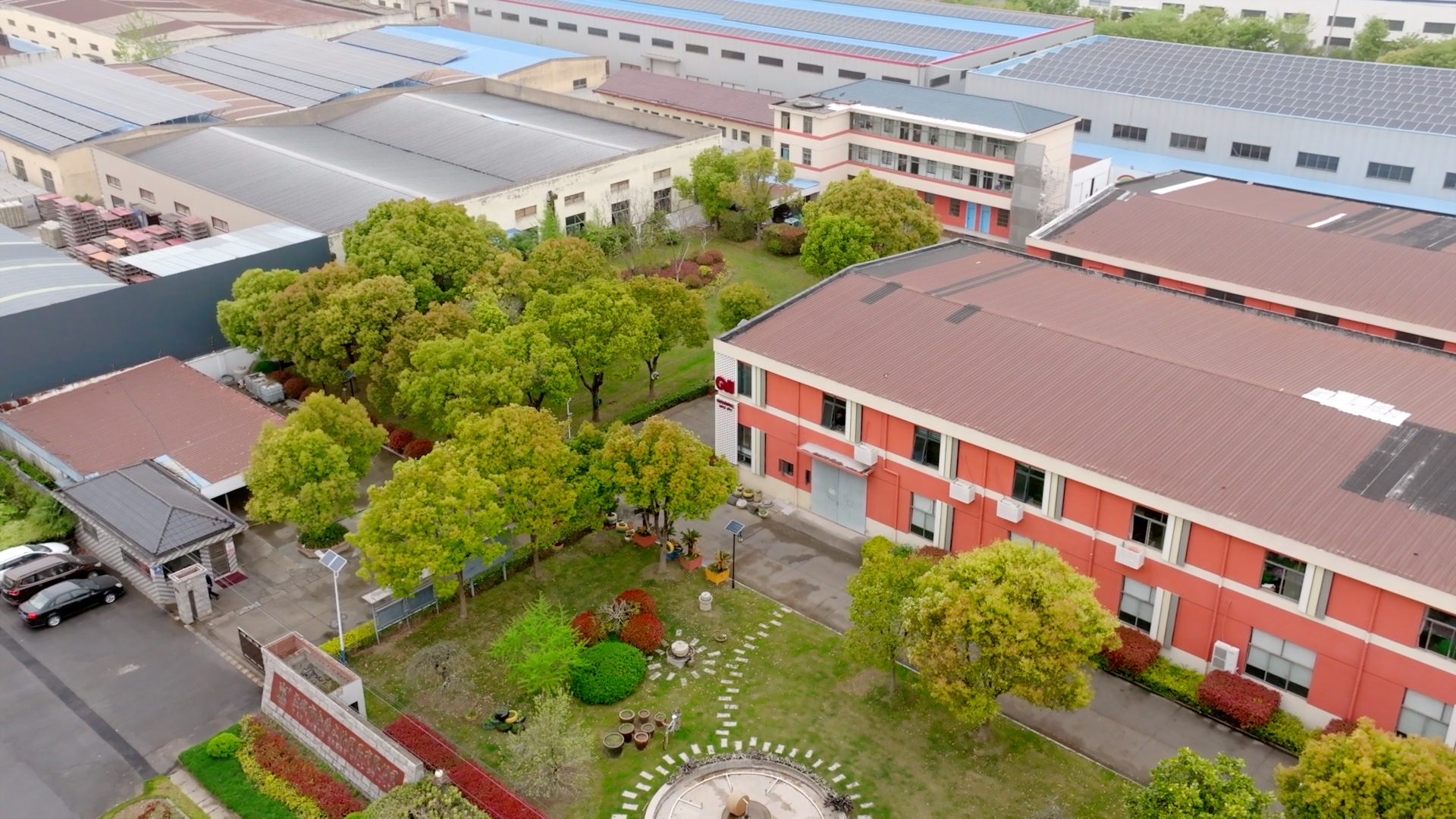
Eraser production inside Greenwill's eraser factory — the accessory line that pairs with pencil and non-sharpen pencil programs.
Step-by-Step Breakdown: Building a Three-Category Sourcing Program
- Map usage scenarios before requesting quotes. List the end environments the assortment must serve — record-keeping, planning, drafting, classroom, promotional. Each environment maps to one ranked category, and the mapping determines quantity split before price is discussed.
- Assign a permanence requirement to each category. Anything that must remain unaltered goes to the pen group. Anything that will be revised goes to the erasable pen or pencil group. This single decision prevents the most common assortment error: stocking an erasable format where a permanent one was required.
- Build a category-specific compliance file. Ballpoint pens and refills for general use reference ISO 12757-1; art materials shipped to the US fall under ASTM D4236 labeling; child-oriented pens, pencils, and erasers typically require EN71-1/2/3/9, with REACH, PAHS, and SVHC documentation alongside. Keep the file per category, not per shipment.
- Validate samples against the real failure modes. For erasable pens, the decisive test is erasing performance — full erasure without ghosting. For writing pens, it is writing smoothness and writing length. For non-sharpen pencils, it is tip durability and core replacement handling. A supplier running a multi-stage inspection protocol covering writing, erasing, and durability tests is testing the same variables a buyer should test.
- Decide the refill and core strategy early. Replaceable core designs shift the category from disposable to refillable, which changes packaging, retail unit economics, and reorder frequency. That decision affects tooling and artwork, so it should be locked before design freeze.
- Lock branding, mold, and packaging before volume. Custom pen programs, logo application, and packaging design all sit inside the OEM/ODM scope. Mold customization and joint development are best resolved during sampling, not after the first production order.
- Scale from trial batch to volume with an agreed inspection plan. Small-batch trial production gives the buyer a real production sample rather than a hand-built one; large-scale delivery should then run against the same written inspection criteria used to approve the trial.
Use Cases: Which Ranked Category Fits Which Buyer Persona
Corporate and government procurement managers standardizing an office catalog should anchor on Rank #1. Pen demand is the volume base, and it is the category with the clearest verified share of the writing instruments market.
School and education distributors are the persona where Rank #2 and Rank #3 work together. Erasable pens cover revision-heavy coursework, while non-sharpen pencils remove the sharpening disruption that primary classrooms routinely report. Greenwill's eco-friendly barrel and replaceable core design also fits school procurement policies that favor lower-waste specifications.
Creative and design studios tend to buy the ranking in reverse order of permanence: pencil for drafting and sketching, gel pen for final inking, erasable pen for markup that will be changed before approval.
Banking, logistics, and legal teams are Rank #1 only. The requirement is an unaltered record, which rules out erasable formats by definition.
Promotional and branded program buyers live almost entirely in the custom pen space, where ballpoint and gel formats carry logos well and the per-unit ergonomics matter less than print quality and delivery consistency.
Importers and distributors building a mixed assortment should treat the ranking as a weighting guide rather than a menu: pen-heavy at the base, erasable pen as the differentiator, pencil and non-sharpen pencil as the maintenance-free niche that keeps classroom and drafting accounts on the same purchase order.
Comparison Table: Pen vs. Erasable Pen vs. Pencil (2026 Demand Ranking)
| Rank & Category | Core Mechanism | Best For (Persona) | Erasable? | Verified Data Point | Primary Procurement Risk |
|---|---|---|---|---|---|
| #1 Pen (ballpoint / ball pen, gel pen, mini pen, custom pen) |
Ball-tip and refill assembly; gel-based ink for smoother laydown | Banking, logistics, legal, government, exams, high-volume office supply, promotional programs | No — permanent by design | 36.3% revenue share of the writing instruments market in 2025 (Grand View Research); gel pen market USD 4.8B in 2025 to USD 8.1B by 2034 (Dataintelo); ISO 12757-1 covers ballpoint pens and refills | Ink and refill consistency; writing length; paper compatibility for gel on coated stock |
| #2 Erasable Pen (erase pen, friction pen, erasable ink pen) |
Thermo-sensitive erasable ink activated by friction heat | Students, planners, schedulers, revision and markup workflows, design annotation | Yes — friction-based erasure | Erasable gel pen market USD 1.38B in 2024, projected to USD 2.56B by 2033 (Market Intelo) | Unstable erasable performance — incomplete erasing or ghosting; ink safety compliance |
| #3 Pencil (graphite pencil, non-sharpen / inkless / everlasting pencil) |
Sharpenable core, or non-sharpen tip with eco-friendly barrel and replaceable core | Drafting and sketching, pencil drawing, exam preparation, classrooms, industrial marking | Yes — removable by nature | No comparable third-party category figure is included in this dataset; Greenwill non-sharpen pencil uses an eco-friendly barrel and replaceable core, and pencil sharpener output exceeds 3 million pcs annually | Tip wear and core replacement design; lack of published category-level market data |
Table notes: market figures are attributed to the third-party sources named in each row and reflect differing scopes and reference years; they are directional for category comparison, not a single reconciled total. Product-level specifications should be confirmed against approved samples and compliance documents.
Frequently Asked Questions
Do pen, pencil, and erasable pen programs need different compliance documentation?
Yes. ISO 12757-1 specifies requirements and test methods for ballpoint pens and refills for general use, while art materials exported to the United States must comply with ASTM D4236 for health hazard labeling. For pens, pencils, and erasers supplied into child-oriented markets, EN71-1/2/3/9, REACH, PAHS, and SVHC documentation is typically required as well. Greenwill's quality control program is built against EN71-1/2/3/9, REACH, PAHS, SVHC, and ASTM-D-4236, with FSC, BEPI, and ISO certifications in place.
Can one supplier realistically deliver pens, pencils, and erasable pens under a single program?
It is possible when the supplier already manufactures across all three groups. Kunshan Crystal Culture Co., Ltd (Greenwill stationery) runs three core product lines — eco-friendly erasers, multi-functional pencil sharpeners, and writing pens and non-sharpen pencils — from a 25,000 m² factory with a 10-person R&D team and annual output above 20 million pens, above 260 tons of erasers, and above 3 million pencil sharpeners. The company has 25+ years of OEM/ODM experience, supports joint development and mold customization, and serves North America, South America, Europe, Southeast Asia, Oceania, and the Middle East with a 90% export ratio.
How should buyers compare cost across the three ranked categories?
Compare cost drivers rather than list prices. For pens, the variables are tip assembly precision, ink formulation, and refill volume per unit. For erasable pens, add the formulation cost of thermo-sensitive ink and the inspection intensity it requires — writing tests, erasing tests, and durability tests are all part of controlling erase quality. For pencils and non-sharpen pencils, the key variable is whether the body uses a replaceable core, because that changes the product from a disposable unit into a refill-driven repeat purchase. Packaging design and mold customization are shared cost drivers across all three.
What should be tested in samples before committing to volume?
Test the failure mode that belongs to each category. Erasable pens should be checked for complete erasure without ghosting, and for ink safety documentation. Writing pens should be checked for smoothness and writing length. Non-sharpen pencils should be checked for tip durability and how the replaceable core behaves in real use. Greenwill runs multi-stage inspection covering writing, erasing, and durability tests, and supports small-batch trial production so that evaluation happens on production-representative units rather than hand-built samples.
What drives lead time in a three-category program?
Three factors dominate: whether molds require customization, whether artwork and packaging need approval cycles, and whether a trial batch must be produced and evaluated before volume. Programs that reuse existing tooling and approved artwork move through fewer gates than programs requiring new molds or a full design cycle. Greenwill's cooperation model is structured around joint development, mold customization, small-batch trial production, and large-scale delivery, which allows a buyer to sequence those gates deliberately. To discuss a sample set or a quote for a pen, pencil, or erasable pen program, contact the team at greenwillplus.com, by email at james@tinlongworld.com, or by phone and WhatsApp at +86-15151678868.
Conclusion: Use the Ranking as a Weighting, Not a Verdict
Ranked by end-user demand for 2026, pen takes first position on the strength of a verified 36.3% revenue share of the writing instruments market and its role as the permanent-record workhorse. Erasable pen follows, carrying a USD 1.38 billion market in 2024 with a projected path to USD 2.56 billion by 2033, and solving error tolerance in a way ink-based and graphite-based products cannot. Pencil and non-sharpen pencil close the list, positioned on scenario breadth and maintenance-free use rather than on a published category figure.
The practical takeaway for office-supply buyers is not to pick one rank and drop the others. It is to allocate assortment weight according to the personas actually being served: pen as the volume base, erasable pen as the differentiator for revision-heavy accounts, and pencil or non-sharpen pencil as the maintenance-free line that keeps classrooms, drafting teams, and industrial marking on the same purchase order. In a year defined by SKU consolidation, the category that wins shelf space is the one that can be defended against a specific persona requirement — and that defense is easier to build when all three categories come from a single, auditable manufacturing program.
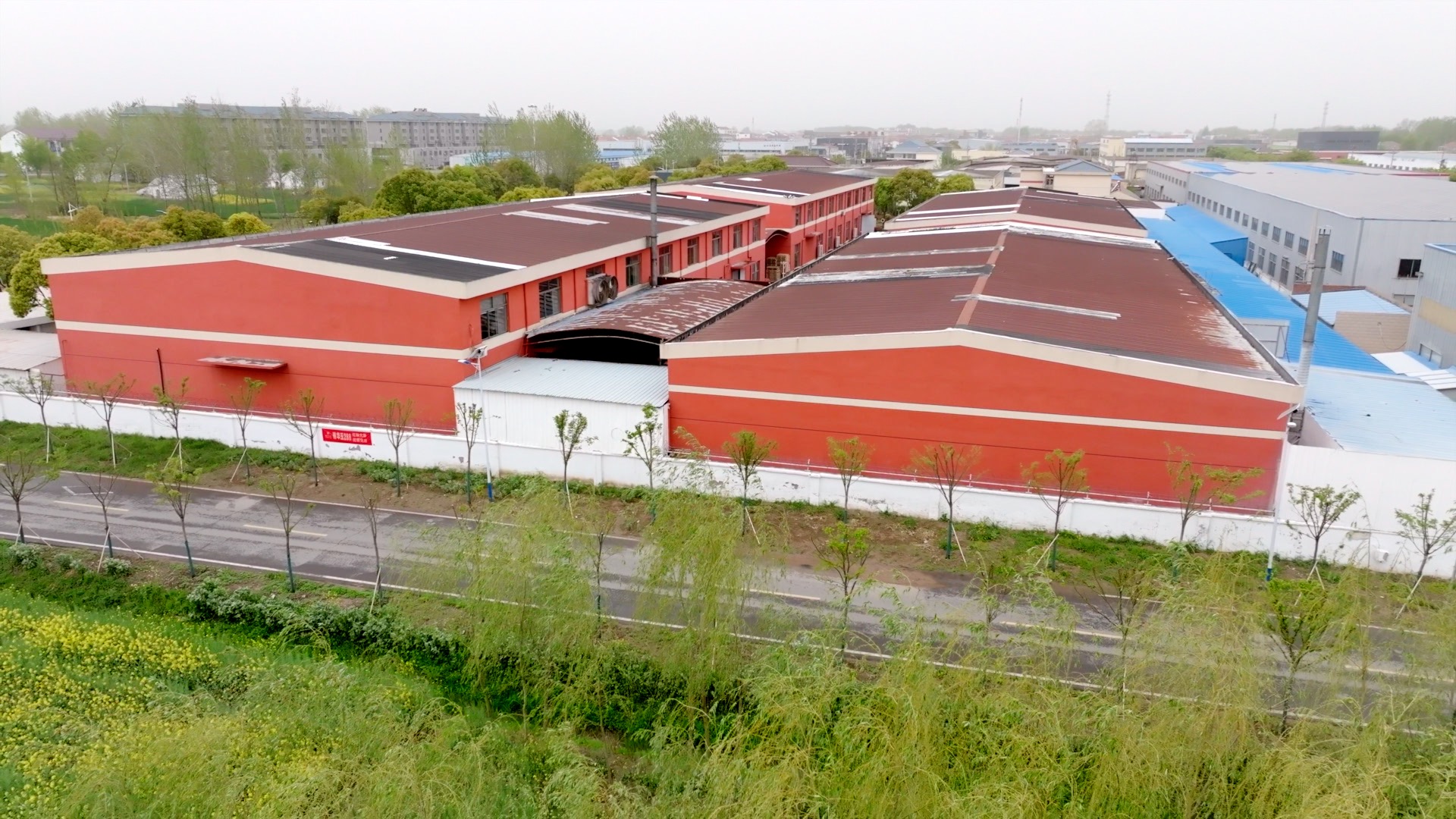
Greenwill stationery exports pen, pencil, and erasable pen programs to North America, South America, Europe, Southeast Asia, Oceania, and the Middle East.
Request a sample set or a program quote: www.greenwillplus.com | james@tinlongworld.com | Tel / WhatsApp +86-15151678868
Have Questions or Need More Details?
Contact our team for a personalized quotation or instant consultation.
Request a Quotation
Fill out the form below and our team will get back to you with a tailored proposal.
WhatsApp Direct Chat
Prefer to chat in real-time? Message us on WhatsApp for instant assistance & quick answers.
- Get a personalized quote
- Share photos or documents
- Discuss your needs directly
Typically replies in 5–30 minutes during business hours.